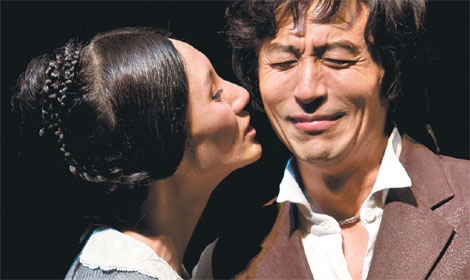
Drama Jane Eyre
Introduction
The Chinese stage production of Jane Eyre, adapted from Charlotte Bronte's celebrated 1847 novel, stands as a landmark collaboration in contemporary Chinese theater. Jointly produced by the National Centre for the Performing Arts (NCPA) and the National Theatre of China, this adaptation brought the iconic story of resilience, love, and self-determination to Chinese audiences with a unique artistic sensibility.
Premiering on June 19, 2009, at the NCPA in Beijing, the production was directed by Wang Xiaoying, one of China's most acclaimed theater directors, and starred renowned actors Yuan Quan as Jane Eyre and Wang Luoyong as Edward Rochester.
Background and Context
The 2009 Jane Eyre stage play represents a milestone in the cultural exchange between Western literature and Chinese performing arts. Charlotte Bronte's novel, celebrated globally for its revolutionary depiction of a woman's inner life and quest for independence, had long resonated with Chinese audiences.
This adaptation was conceived as part of a broader initiative to reinterpret Western classics for modern Chinese theatergoers. Wang Xiaoying, whose directorial oeuvre includes numerous adaptations of literary works, aimed to preserve the novel's Victorian ethos while infusing it with a contemporary theatrical vocabulary accessible to Chinese audiences. The production's partnership between the NCPA and the National Theatre of China underscored its status as a high-profile cultural endeavor.
Artistic Features and Direction
Under Wang Xiaoying's direction, Jane Eyre emphasized emotional authenticity and visual storytelling. Wang's approach balanced dramatic intimacy with grand stagecraft, ensuring that the production captured the novel's gothic atmosphere and psychological depth. Yuan Quan's portrayal of Jane Eyre was widely praised for her nuanced performance, which conveyed the character's quiet strength and moral fortitude. Similarly, Wang Luoyong's interpretation of Rochester brought complexity to the enigmatic and tormented figure.
The production's set design, lighting, and music were meticulously crafted to evoke the novel's settings, from the bleak orphanage of Lowood to the imposing Thornfield Hall. The minimalist yet evocative stage design, combined with dynamic lighting, created an immersive environment that highlighted the characters' internal struggles. Original compositions and carefully selected musical pieces further accentuated the emotional tone, creating a cohesive sensory experience.
Reception
The 2009 adaptation of Jane Eyre was lauded by critics and audiences alike for its compelling performances and innovative staging. It was heralded as a model of how Western literary classics could be reimagined for the Chinese stage without losing their cultural essence. The production resonated deeply with Chinese theatergoers, particularly women, who found inspiration in Jane Eyre's steadfast pursuit of freedom and dignity.
Its success prompted multiple revivals and tours, solidifying its place in the repertoire of modern Chinese theater. The production also sparked broader discussions about the adaptation of Western classics in China, highlighting the ways in which universal themes could bridge cultural and historical divides.
The Jane Eyre stage play represents a fusion of literary heritage and theatrical innovation, showcasing the growing sophistication of Chinese theater in engaging with global narratives. It demonstrated how Chinese artists could reinterpret Western works in a manner that resonated with local audiences while retaining the integrity of the original. This production not only reinforced the enduring relevance of Charlotte Bronte's novel but also underscored the vital role of theater in fostering cross-cultural dialogue.








